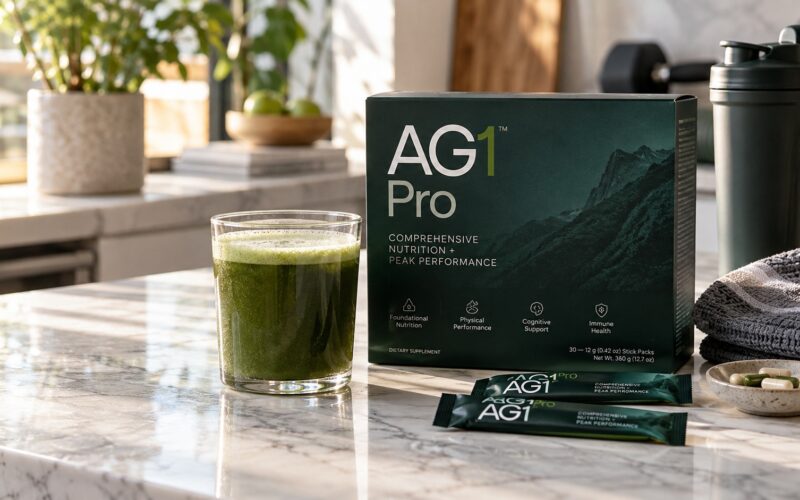
Is AG1 Pro Worth It? What’s Different and Who Should Buy It
AG1 has been everywhere for years. And just when you thought you’d figured out whether the original greens powder was worth buying, the company introduced something new: AG1 Pro.
It’s basically AG1, but with creatine and a few other ingredients added to support muscle health, recovery, and digestion.
Which sounds great, especially if you’re someone who works out regularly.
But there’s a catch.
AG1 Pro costs $99 per month, compared with $79 for regular AG1.
So now you’re looking at spending almost $1,200 a year on a greens powder.
That raises a pretty reasonable question: Is AG1 Pro actually worth it, or are you better off buying regular AG1 and taking creatine separately?
Let’s break down exactly what’s different, what the ingredients actually do, and whether the extra $20 per month makes sense.
What Is AG1 Pro?
AG1 Pro is an upgraded version of the popular AG1 greens powder, officially introduced in June 2026.
Like regular AG1, it combines vitamins, minerals, probiotics, prebiotics, and plant-based ingredients into one daily drink.
But AG1 Pro takes things a step further by adding ingredients intended to support muscle strength, recovery, and digestive health.
The idea is to provide daily nutritional supplementation alongside some of the ingredients people might otherwise purchase separately for their fitness routines.
According to AG1, the Pro formula contains more than 80 ingredients and builds on the existing AG1 Next Gen formula.
Its three biggest additions are:
- 5g creatine monohydrate: A well-researched supplement for improving strength and exercise performance.
- 1.5g calcium-HMB: A compound studied for its potential role in reducing muscle breakdown and supporting recovery.
- 75mg zinc carnosine: A compound being studied for supporting the gastrointestinal lining.
AG1 Pro also includes ingredients such as ginger and triphala for additional digestive support.
Unlike regular AG1, which comes in a pouch or individual packets, AG1 Pro is sold in single-serving stick packs.
It’s clearly being marketed toward people who want more from their supplements than basic vitamins and minerals.
But just because a formula contains more ingredients doesn’t necessarily mean everybody needs them.
AG1 Pro vs Regular AG1: What’s the Difference?
This is where things get interesting.
Regular AG1, now called AG1 Next Gen, already contains more than 75 ingredients, including a variety of vitamins, minerals, probiotics, and plant compounds.
AG1 Pro includes that same foundational formula, plus additional ingredients focused on muscle and gut support.
Here’s a comparison.
| Feature | AG1 Next Gen | AG1 Pro |
|---|---|---|
| Vitamins and minerals | Yes | Yes |
| Probiotics and prebiotics | Yes | Yes |
| Greens and plant compounds | Yes | Yes |
| Creatine monohydrate | No | 5g |
| Calcium-HMB | No | 1.5g |
| Zinc carnosine | No | 75mg |
| Serving size | 13g | 20g |
| Available format | Pouch or packets | Stick packs |
| Monthly subscription | $79 | $99 |
| Cost per serving | $2.63 | $3.30 |
Prices are based on published U.S. subscription pricing as of October 2026 and may change.
Both products are also NSF Certified for Sport, meaning they’re independently tested to meet certification standards, including screening for prohibited substances.
That’s particularly relevant for competitive athletes who need to be careful about supplement quality.
So is AG1 Pro actually better?
It depends on what you’re looking for.
If your goal is simply to supplement your daily nutrition, regular AG1 already offers a broad combination of vitamins and minerals.
But if you’re interested in strength training, muscle preservation, and recovery, AG1 Pro includes ingredients that regular AG1 doesn’t.
Whether those additions are worth paying for is a different question.
And I think the best place to start is with the ingredient that makes the biggest difference between the two products: creatine.
1. AG1 Pro Contains 5g of Creatine, And That’s a Big Selling Point
Of all the new ingredients in AG1 Pro, creatine is probably the one I’d pay the most attention to.
Creatine monohydrate is one of the most extensively researched supplements in sports nutrition.
It helps replenish the energy your muscles use during short, intense activities, such as lifting weights or sprinting.
Research supports creatine supplementation for improving strength and high-intensity exercise performance, particularly when combined with resistance training.
And no, creatine isn’t just for bodybuilders.
Women who lift weights, older adults focused on maintaining strength, and people trying to preserve muscle during weight loss may also have reasons to consider it.
Does AG1 Pro have enough creatine?
Yes.
AG1 Pro contains 5 grams of creatine monohydrate per serving.
That’s within the commonly recommended daily maintenance range of 3–5 grams for many adults.
In other words, this isn’t a product containing a tiny sprinkle of creatine just so the company can advertise it on the label.
It provides a meaningful amount.
AG1 uses Creavitalis creatine monohydrate, a branded creatine ingredient selected for its purity and quality standards.
But here’s what you should consider.
Creatine monohydrate is already available as a standalone supplement, usually at a much lower price.
And you don’t need a premium greens powder to get its benefits.
If you’re already happy with regular AG1 and take creatine separately, switching to AG1 Pro might not provide a meaningful advantage.
The benefit is convenience.
Instead of remembering your greens powder and creatine separately, you get both in one product.
For some people, that’s worth paying extra for.
For others, it’s just an unnecessary expense.
2. AG1 Pro Contains HMB for Muscle Preservation
The second major addition is calcium-HMB.
HMB stands for beta-hydroxy-beta-methylbutyrate, a compound your body naturally produces from the amino acid leucine.
Leucine is one of the amino acids involved in muscle protein synthesis.
HMB has been researched for its potential role in reducing muscle protein breakdown, supporting recovery, and helping preserve muscle mass.
This is particularly interesting for people who are:
- Strength training regularly
- Trying to maintain muscle while losing weight
- Returning to exercise after a period of inactivity
- Getting older and prioritizing muscle preservation
However, there’s something important to understand about the research.
Does HMB actually work?
The evidence is mixed.
Some studies suggest HMB may help with muscle recovery and reducing muscle damage, especially during demanding exercise programs.
Other studies have found limited or inconsistent improvements in strength or muscle growth, particularly among people who already train regularly.
There’s also the question of dosage.
AG1 Pro contains 1.5 grams of calcium-HMB per serving.
Many HMB studies have investigated approximately 3 grams per day, although research has examined different amounts.
That doesn’t automatically make 1.5 grams ineffective.
It does mean you shouldn’t assume AG1 Pro will provide the same results observed in studies using higher doses.
And if you’re already eating enough protein, lifting consistently, and recovering properly, the additional benefit may be relatively small.
My takeaway: HMB is an interesting addition, especially for muscle preservation, but it isn’t nearly as established or essential as creatine.
3. Zinc Carnosine for Gut Health: Is It Actually Helpful?
AG1 Pro also includes 75mg of zinc carnosine.
This ingredient doesn’t get nearly as much attention as creatine, but it’s one of the main reasons AG1 positions Pro as an advanced gut health formula.
Zinc carnosine combines zinc with L-carnosine, a compound made from two amino acids.
It’s been studied for its potential role in supporting the gastrointestinal lining.
Some research suggests zinc carnosine may help protect the intestinal barrier under certain conditions.
But the available human research is still limited, and we need more high-quality studies to know how useful it is for otherwise healthy people.
Will AG1 Pro help with bloating?
Maybe for some individuals, but it’s not something I’d count on.
AG1 Pro also contains probiotics, prebiotics, ginger, and other ingredients associated with digestive health.
However, bloating can have many different causes, and adding supplements doesn’t always improve it.
Some people actually experience additional gas or digestive discomfort when introducing prebiotics or other ingredients.
So while AG1 Pro has ingredients worth studying for digestive health, it shouldn’t be treated as a guaranteed solution for bloating or stomach problems.
If you’re experiencing persistent digestive symptoms, identifying the underlying cause is much more important than buying an expensive supplement.
How Much Does AG1 Pro Cost?
Let’s get into the numbers.
Because I think this is where most people will decide whether AG1 Pro is worth buying.
AG1 currently offers several purchasing options.
| AG1 Pro Purchase Option | Price | Approximate Cost Per Serving |
|---|---|---|
| Monthly subscription | $99/month | $3.30 |
| 90-day subscription | $267 every 90 days | $2.97 |
| One-time purchase | $119 | $3.97 |
A regular monthly AG1 Pro subscription comes to $1,188 per year.
Compare that with regular AG1 Next Gen at $79 per month, or $948 annually.
That’s a $240 difference over a year.
Now, $20 more per month might not sound outrageous when you’re getting creatine, HMB, and zinc carnosine added to your daily supplement.
But there’s another way to look at it.
Is AG1 Pro cheaper than buying everything separately?
Not necessarily.
Basic creatine monohydrate is usually inexpensive when purchased separately.
You can often get a month’s supply for considerably less than the $20 difference between regular AG1 and AG1 Pro.
If creatine is the only additional ingredient you want, buying it separately may be the more economical option.
However, if you’re already purchasing regular AG1, creatine, HMB, and another digestive supplement, consolidating those purchases could make more sense.
The important part is comparing what you actually use.
Don’t justify spending $99 a month because it theoretically replaces five different supplements if you were never going to buy those supplements in the first place.
Check Current AG1 Pro Pricing and Offers
Is AG1 Pro Worth It for Women Who Lift Weights?
I think this is one of the more interesting potential uses for AG1 Pro.
If you’re a woman who strength trains, you already know that getting stronger involves a lot more than just showing up at the gym.
You need sufficient protein, enough calories to support your goals, a good training program, and adequate recovery.
Supplements can support that foundation, but they can’t replace it.
AG1 Pro includes creatine, which has good evidence supporting its use during resistance training.
And HMB may provide some additional recovery or muscle-preservation benefits under certain circumstances.
But here’s what I’d want women to understand before spending $99 per month:
AG1 Pro isn’t going to build muscle for you.
You still need progressive resistance training and adequate nutrition.
And if you’re struggling to get enough protein, I’d prioritize addressing that before spending money on a premium greens powder.
AG1 Pro is a supplement, not a protein shake.
For women who already have their training and nutrition in place, it may be a convenient addition.
But it’s not a requirement for building strength or improving body composition.
Is AG1 Pro Worth It if You’re Trying to Lose Weight?
AG1 has also positioned Pro as a potential companion for people using GLP-1 medications.
This is worth discussing because preserving muscle during weight loss is important.
When you lose weight, you can lose both fat and lean tissue.
Resistance training, adequate protein, and appropriate nutrition can help reduce muscle loss.
AG1 Pro includes creatine and HMB, two ingredients that have been investigated for muscle-related benefits.
However, that doesn’t mean AG1 Pro has been proven to prevent muscle loss specifically in people taking GLP-1 medications.
And it definitely doesn’t replace the need to eat enough protein.
If you’re losing weight and struggling to eat adequate amounts of food, the priority should be meeting your nutritional needs and working with your healthcare provider when appropriate.
A greens powder won’t automatically solve inadequate calorie or protein intake.
AG1 Pro may be worth discussing with your healthcare professional as part of a broader nutrition plan, but I wouldn’t consider it essential for weight loss.
Is AG1 Pro Worth It if You Already Take Creatine?
This might be the easiest question to answer.
If you already take 3–5 grams of creatine monohydrate every day and you’re happy with your current supplement routine, you probably don’t need AG1 Pro just for the creatine.
You’re already getting that ingredient separately.
Switching could still make sense if you:
- Prefer having your supplements combined into one drink
- Want to try a formula that also contains HMB and zinc carnosine
- Already purchase AG1 regularly
- Don’t mind spending more for convenience
But if cost is a priority, there’s no compelling reason to assume that creatine included in AG1 Pro will work better than a quality standalone creatine monohydrate product.
And if you do switch, remember that AG1 Pro already includes 5 grams of creatine.
You generally wouldn’t need to keep taking your full standalone dose on top of it unless your healthcare professional or sports dietitian recommends otherwise.
What I Like About AG1 Pro
Looking at the formula objectively, there are several things that stand out.
It contains a useful amount of creatine.
Five grams is a meaningful daily serving, which makes this one of the strongest selling points of the formula.
It combines several supplements into one routine.
If you’re already using AG1 and additional fitness supplements, combining them may be convenient.
It’s independently certified for sport.
NSF Certified for Sport is a useful quality standard, especially for athletes subject to banned-substance testing.
It has a clear purpose.
Rather than simply adding more random ingredients, AG1 Pro is positioned around muscle health, recovery, and digestive support.
I appreciate that the product has a more specific focus than a generic greens powder.
What I Don’t Love About AG1 Pro
There are also a few things worth considering before buying.
It’s expensive.
At $99 per month, this is a premium supplement.
You can buy basic vitamins, creatine, and other supplements separately for less money depending on your needs.
Not every ingredient has equally strong evidence.
Creatine has a substantial research base.
The evidence for HMB is more mixed, and research on zinc carnosine for everyday gut health is less established.
Having all three ingredients in one product doesn’t automatically mean you’ll experience all the advertised benefits.
You might not need everything in the formula.
If you already eat a balanced diet, take appropriate supplements, and have no known nutritional gaps, adding more nutrients may not improve your health.
It doesn’t replace good nutrition.
AG1 Pro won’t make up for inadequate protein intake, poor sleep, or a consistently unbalanced diet.
And it shouldn’t replace supplements prescribed for specific deficiencies without medical guidance.
Who Should Consider Buying AG1 Pro?
After comparing both formulas, I think AG1 Pro makes the most sense for someone who already values the convenience of AG1 and wants to add creatine to their daily routine.
It may be particularly appealing to people who:
- Already purchase regular AG1
- Strength train consistently
- Want 5g of creatine included in their greens drink
- Are interested in muscle preservation as they age
- Prefer convenient single-serving packets
- Can comfortably afford the subscription
On the other hand, I’d probably stick with regular AG1 or separate supplements if you:
- Only want basic nutritional supplementation
- Already take creatine daily
- Are looking for the most cost-effective option
- Expect dramatic muscle growth from the additional ingredients
- Don’t have a reason to prioritize HMB or zinc carnosine
Is AG1 Pro Worth Trying?
If you’re already an AG1 customer and have been considering adding creatine to your routine, I can see the appeal of trying Pro.
You’re getting the familiar daily nutritional formula with some additional ingredients that may support your fitness goals.
AG1 currently offers a 90-day money-back guarantee, subject to its terms, which may make the purchase feel less risky.
But I wouldn’t approach it expecting a dramatic transformation.
You may notice improvements in strength over time if you’re combining creatine supplementation with consistent training.
That doesn’t mean every improvement is necessarily caused by AG1 Pro, though.
And you might not notice anything particularly dramatic from the HMB or zinc carnosine.
If you decide to try it, assess whether the convenience, ingredients, and cost make sense for your routine.
See AG1 Pro’s Current Offers and Subscription Options
Frequently Asked Questions About AG1 Pro
Is AG1 Pro better than regular AG1?
AG1 Pro contains additional ingredients, including 5g creatine monohydrate, 1.5g calcium-HMB, and 75mg zinc carnosine. These may make it more appealing for people focused on muscle health and recovery, but it isn’t automatically better for everyone.
Does AG1 Pro have enough creatine to work?
Yes. AG1 Pro contains 5g of creatine monohydrate per serving, which falls within a commonly recommended daily maintenance range for many adults.
Can AG1 Pro help build muscle?
The creatine in AG1 Pro can support strength and high-intensity exercise performance when combined with resistance training. However, AG1 Pro doesn’t replace sufficient protein intake, progressive training, or recovery.
Does AG1 Pro help with weight loss?
AG1 Pro isn’t a weight-loss supplement, and it hasn’t been established as a treatment for obesity. Some ingredients may support strength or muscle preservation, but losing body fat still depends on broader nutrition, activity, and health factors.
Can you take AG1 Pro and regular AG1 together?
Generally, there’s no reason to use both daily because AG1 Pro already includes the foundational AG1 formula. Combining them could result in unnecessary overlap in vitamin and mineral intake.
Does AG1 Pro replace a multivitamin?
It provides many vitamins and minerals commonly included in multivitamins, but whether it can replace your existing supplement depends on your individual nutritional needs.
Is AG1 Pro worth the extra $20 per month?
If you already buy AG1 and want the added creatine, HMB, and zinc carnosine in one convenient product, the additional cost may be reasonable. If you primarily want creatine, buying it separately will often be cheaper.
What does AG1 Pro taste like?
According to AG1, Pro has a lightly sweet flavor with pineapple, banana, vanilla, and orange notes. Taste preferences vary, so not everyone will enjoy it.
Is AG1 Pro safe?
AG1 Pro is intended for adults and is NSF Certified for Sport. However, certification doesn’t guarantee that a product is appropriate for every medical condition or medication combination. Consult a healthcare professional before starting it if you take medications, have a health condition, or are pregnant or breastfeeding.
Final Verdict: Is AG1 Pro Worth It?
So, is AG1 Pro actually worth the money?
I think it can be worth considering if you’re already interested in AG1 and want the convenience of getting creatine and additional muscle-support ingredients in the same drink.
The 5 grams of creatine is the biggest selling point for me from an evidence perspective.
That’s an ingredient with a solid research history, particularly for people who strength train.
The HMB and zinc carnosine make the formula more interesting, but I wouldn’t buy AG1 Pro based on those ingredients alone.
And if you already take regular AG1 and an inexpensive creatine supplement separately, I wouldn’t assume upgrading will produce better results.
You might simply be paying more for convenience.
But convenience has value, too.
If one daily drink helps you maintain a consistent supplement routine and fits comfortably within your budget, AG1 Pro may be worth considering.
Just remember that the foundation of health and fitness still comes down to eating well, exercising consistently, getting enough sleep, and meeting your individual nutritional needs.
No supplement replaces those things.
If AG1 Pro sounds like a good fit for your routine, you can check the current AG1 Pro pricing, subscription options, and available offers here.
And if you aren’t sure whether Pro is necessary, consider starting by comparing it with the supplements you’re already taking.
Sometimes upgrading makes sense.
Other times, what you’re already doing is enough.
Medical disclaimer: This article is intended for general informational purposes and is not medical advice. Consult your healthcare professional before starting or changing supplements, particularly if you have a medical condition, take prescription medications, are pregnant or breastfeeding, or have been prescribed supplements for a nutritional deficiency.